Wrapping Paper Mockup and Gift Paper Mockup: A Comprehensive Evaluation
In the competitive landscape of graphic design, print production, and e-commerce, visual presentation is often the deciding factor in a customer’s purchasing decision. For designers creating custom stationery, packaging, or gift accessories, the ability to present a design in a realistic context is paramount. This is where specialized digital assets, specifically a wrapping paper mockup and a gift paper mockup, become essential tools. These resources allow creators to showcase their work with professional fidelity without the logistical overhead of physical photography.
This article evaluates the utility, benefits, and practical considerations of using high-quality PSD mockup templates for wrapping and gift paper designs. By understanding how these digital tools function and when they are most effective, designers can make informed decisions about integrating them into their workflow.
Understanding Wrapping Paper Mockups and Gift Paper Mockups
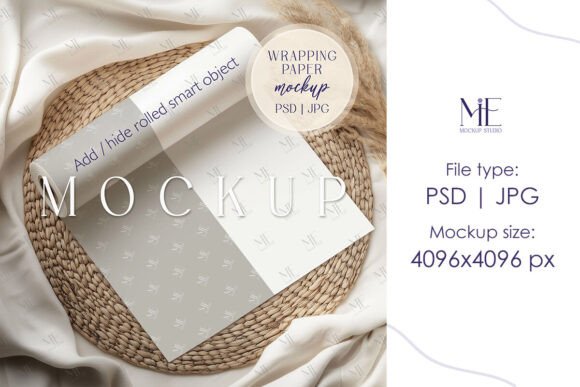
A wrapping paper mockup is a digital file, typically in Photoshop (PSD) format, that simulates the appearance of printed material wrapped around an object, such as a box, cylinder, or folded sheet. Similarly, a gift paper mockup serves the same purpose but may focus on specific textures, folds, or lighting conditions associated with gift-giving scenarios. These templates are not merely static images; they are interactive files containing Smart Object layers.
The core functionality relies on Adobe Photoshop’s Smart Object technology. When a designer opens the template, they encounter a placeholder layer. By double-clicking this layer, the designer can insert their own artwork—whether it be a pattern, illustration, or typography design—and save the changes. The software automatically maps the new design onto the curved or folded surfaces of the mockup, preserving shadows, highlights, and perspective. This process ensures that the final output looks like a photograph of a real product rather than a flat image superimposed on a background.
Key Benefits for Designers and Businesses
Adopting digital mockup templates offers several distinct advantages over traditional methods of product visualization. Below are the primary reasons professionals choose these tools for their projects.
- Instant Accessibility and Efficiency: Unlike physical photoshoots, which require scheduling, location scouting, and equipment setup, digital mockups are available for instant download. Once purchased, the files are accessible immediately, allowing for rapid iteration and quick turnaround times for client presentations.
- Cost-Effectiveness: Producing high-quality product photography involves costs for models, props, lighting, and post-production editing. A single PSD template provides unlimited variations of the same scene, significantly reducing the cost per presentation asset.
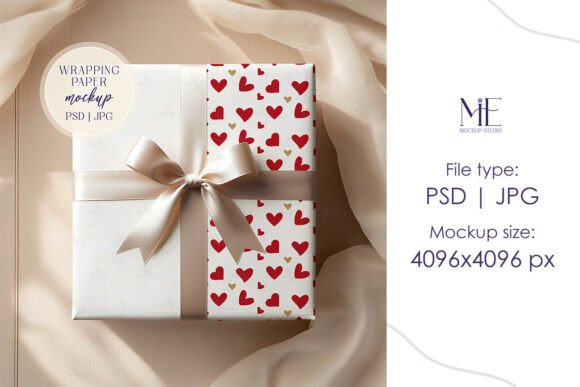
- High-Fidelity Realism: Modern mockups utilize high-resolution imagery (often 4096x4096 pixels or higher) and advanced blending modes to replicate natural light interactions. This realism helps clients visualize the end product accurately, reducing misunderstandings and revision cycles.
- Versatility Across Applications: While the primary use case is wrapping paper, these templates are frequently adaptable for other paper goods. They are equally effective for showcasing invitations, business cards, tags, labels, and favor boxes. This versatility makes them a valuable addition to a designer’s portfolio toolkit.
Evaluating Technical Specifications and Usability
When selecting a mockup wrapping paper PSD template, technical specifications play a crucial role in ensuring compatibility and quality. Understanding what to expect from the file structure helps users avoid frustration during the design process.
File Structure and Content
A standard package typically includes two main components:
- One PSD File: This is the editable source file. It contains fully editable Smart Object layers. The presence of non-destructive editing capabilities is critical, as it allows designers to experiment with different colors and patterns without altering the original base image.
- One High-Resolution JPG File: This serves as a preview or a ready-to-use final image. With dimensions such as 4096x4096 pixels, this file ensures exceptional clarity for web display or large-format printing.
Size and Scale Considerations
Accuracy in scale is vital for realistic representation. For instance, if a template is designed to represent a specific label size, such as a chocolate label measuring 5.25 x 5.5 inches, the Smart Object layer must be configured to match these proportions. Designers should verify that the aspect ratio of their uploaded design aligns with the mockup’s requirements to prevent distortion. Most professional templates include guides or notes indicating the optimal placement area for artwork.
No Watermarks or Text
Reputable providers ensure that downloaded files are clean. This means the images do not contain watermarks, branding text, or distracting overlays. A clean canvas allows the designer’s work to take center stage, presenting a polished and professional image to potential clients or customers.
Situational Fit: When to Use Digital Mockups
Digital mockups are particularly strong fits for specific stages of the design and sales process. Recognizing these situations helps maximize their value.
Portfolio Development: For freelance designers, having a diverse range of presentation assets is essential. A gift wrap mockup allows a designer to display their skills in pattern creation and texture application within a cohesive, attractive context. This enhances the perceived value of their services.
E-Commerce Product Listings: Online retailers selling custom stationery or party supplies benefit greatly from realistic previews. Customers cannot physically touch the product before buying, so high-quality mockups bridge the sensory gap. They provide confidence in the product’s appearance, potentially reducing return rates.
Client Presentations: When pitching design concepts, showing a flat vector file can be difficult for non-designers to interpret. Presenting the design on a wrapped box or folded card via a mockup provides immediate contextual understanding, facilitating faster approval processes.
Tradeoffs and Alternatives
While digital mockups offer significant advantages, they are not a universal solution. Evaluating their limitations is necessary for balanced decision-making.
Lack of Tactile Feedback: A digital mockup cannot convey the weight, texture, or finish (such as embossing, foil stamping, or matte vs. glossy coating) of the physical paper. If a client needs to evaluate the tactile qualities of a material, a physical prototype or sample is still required. In such cases, mockups serve as a preliminary step rather than a final verification tool.
Software Dependency: Using these templates requires access to Adobe Photoshop or compatible software that supports Smart Objects. Designers working exclusively with free or mobile-based apps may find these templates inaccessible unless they have access to a desktop environment.
Customization Limits: While versatile, each template has a fixed camera angle and lighting setup. If a brand requires a unique perspective that does not match the available mockup, designers may need to commission custom photography or learn complex 3D modeling techniques, which have a steeper learning curve.
Practical Decision-Making Insights
To determine whether investing in a wrapping paper mockup aligns with your goals, consider the following questions:
- Do you frequently design for paper-based products? If your work involves stationery, packaging, or labels, these mockups will streamline your workflow significantly.
- Is speed a priority? If you need to deliver multiple design variations quickly, digital templates offer unmatched efficiency compared to setting up physical scenes.
- What is your technical proficiency? Basic knowledge of Photoshop is sufficient for most templates. However, familiarity with layers and Smart Objects will enhance your ability to troubleshoot and customize effectively.
For those who do not require frequent updates or have limited design budgets, relying on built-in features of design software or generic online generators might suffice. However, for professionals seeking consistency, high resolution, and a polished aesthetic, dedicated PSD templates remain a superior choice.
Conclusion
A wrapping paper mockup and gift paper mockup are more than just decorative placeholders; they are strategic assets that enhance the professionalism and clarity of design presentations. By offering instant access, high-resolution outputs, and easy integration through Smart Objects, these digital tools address common pain points in the design process. While they cannot replace the tactile evaluation of physical samples, they excel in visual communication, portfolio building, and e-commerce optimization. For designers and businesses looking to elevate their visual storytelling, incorporating these mockups into their toolkit is a practical and impactful decision.