Bison Silhouette Icon Vector: A Practical Guide to Versatile Graphic Assets
In the landscape of graphic design, few subjects evoke as much immediate recognition and symbolic weight as the bison. Whether used in branding, apparel design, or editorial illustration, the bison silhouette icon vector serves as a powerful visual shorthand for strength, resilience, and natural heritage. For designers, entrepreneurs, and content creators, understanding the nuances of this asset type is essential before integrating it into a project. This guide explores what makes these vectors distinct, how they compare to other illustrative approaches, and which formats offer the best utility for specific workflows.
Defining the Bison Silhouette Icon Vector
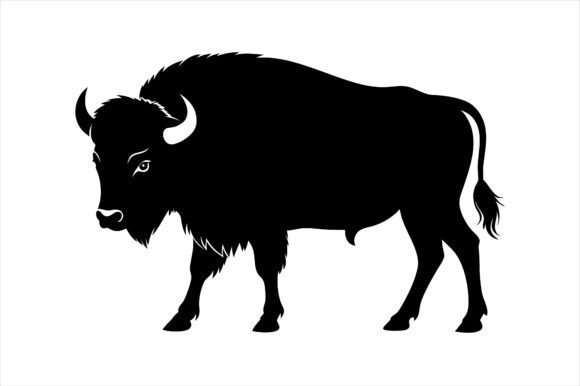
A bison silhouette icon vector is a digital graphic defined by mathematical paths rather than pixels. Unlike raster images (such as JPGs or PNGs) that rely on a fixed grid of colored dots, vector graphics use coordinates to draw lines and curves. When applied to a bison motif, this results in a clean, solid black shape that captures the animal’s distinctive profile—typically featuring its massive shoulder hump, curved horns, and shaggy beard—without internal details like fur texture or eye definition.
The primary appeal of this format lies in its scalability. Because the image is resolution-independent, a bison silhouette icon vector can be resized from a tiny favicon to a massive billboard without any loss of quality or jagged edges. This characteristic makes it particularly valuable for applications where print precision is critical, such as business cards, logos, and large-format signage.
Distinctive Characteristics
- Simplicity: By stripping away detail, the silhouette focuses on form and posture, allowing the viewer to instantly identify the subject.
- Adaptability: The solid shape allows for easy color manipulation, enabling seamless integration into both light and dark design themes.
- Modularity: Vector files often consist of separate layers or grouped elements, allowing designers to tweak proportions or combine shapes with other icons.
Comparison: Vector Silhouettes vs. Raster Illustrations
When evaluating design assets, one must consider the trade-offs between vector silhouettes and traditional raster illustrations. While a highly detailed, hand-painted raster image of a bison might convey texture and atmosphere, it lacks the functional flexibility of a vector icon.
Scalability and Resolution
The most significant differentiator is resolution. If you download a standard JPG of a bison and attempt to enlarge it for a t-shirt print, the image will likely become pixelated or blurry. In contrast, a bison silhouette icon vector maintains crisp edges at any size. This is crucial for commercial products like mugs, book covers, and flyers, where the final output may vary significantly in dimensions.
File Size and Performance
Vector files are generally smaller in file size compared to high-resolution raster images. This not only saves storage space but also improves loading times for web-based projects. For digital platforms, using an SVG (Scalable Vector Graphics) version of the bison icon ensures fast rendering without compromising visual clarity.
Customization Potential
Raster images are difficult to edit non-destructively. Changing the color of a specific part of a complex bison illustration often requires masking or redrawing. With a vector silhouette, however, changing the fill color, adding gradients, or combining it with other shapes is instantaneous. This ease of customization is a major advantage for brands that need to adapt their visual identity across different mediums.
Evaluating File Formats and Technical Specifications
The utility of a bison silhouette icon vector is heavily dependent on the file formats provided. Not all vector files are created equal, and understanding the differences between AI, EPS, SVG, DXF, and PNG is vital for choosing the right tool for your job.
Industry Standard Formats: AI and EPS
Adobe Illustrator (AI) and Encapsulated PostScript (EPS) are the gold standards for professional vector editing. These formats preserve all layer information, anchor points, and editable paths. If you plan to modify the bison silhouette extensively—perhaps adjusting the curve of the horn or merging it with text—these formats are indispensable. They ensure that the integrity of the 100 vector shapes mentioned in high-quality packs remains intact, allowing for precise adjustments.
Web-Ready Optimization: SVG
For web designers and developers, SVG is the preferred format. It is XML-based, meaning it can be coded directly into HTML. An SVG bison icon can be styled with CSS, making it possible to change colors on hover or animate the shape. This format bridges the gap between static graphics and interactive web experiences.
Cutting and Manufacturing: DXF
If your end goal involves physical fabrication, such as vinyl cutting, laser engraving, or CNC routing, the DXF (Drawing Exchange Format) is often required. Many die-cut machines and sign-making plotters rely on DXF files to interpret the path of the cut. A bison silhouette icon vector provided in DXF ensures that the machine reads the outline accurately, preventing errors in production.
Universal Compatibility: PNG and JPG
While PNGs support transparency and are widely compatible, they are rasterized versions of the vector. They are useful for quick previews or for users who do not have vector editing software. However, relying solely on PNGs limits your ability to scale the image further without quality loss. JPGs, lacking transparency, are less versatile for overlaying designs onto different backgrounds.
Use Cases and Best-Fit Situations
Determining when to use a bison silhouette icon vector depends largely on the context of the project. Here are several scenarios where this asset shines, along with considerations for when it might not be the best choice.
Apparel and Merchandise
T-shirts, hoodies, and tote bags benefit immensely from vector silhouettes. The bold, high-contrast nature of a black bison shape stands out well against various fabric colors. Furthermore, screen printing and heat transfer vinyl processes work best with simple, solid shapes. Complex gradients or fine details in raster images can be costly or impossible to reproduce in these mediums. A vector file simplifies the separation process for printers, reducing production costs and time.
Branding and Logos
For businesses in the outdoors, hunting, conservation, or rugged lifestyle sectors, a bison icon can serve as a foundational logo element. Its simplicity ensures memorability and recognizability even at small sizes, such as on social media avatars or app icons. The ability to easily swap colors allows the brand to maintain consistency across diverse marketing materials, from dark-themed event posters to white-background business cards.
Digital Interfaces and UI Design
In user interface design, icons must load quickly and remain clear on high-density screens. An SVG bison icon is ideal for navigation menus, feature highlights, or decorative elements in apps and websites. Its lightweight nature contributes to better site performance metrics, which is a key factor in SEO and user experience optimization.
Limitations and Considerations
While powerful, the bison silhouette icon vector is not a one-size-fits-all solution. Designers must be aware of its limitations to avoid mismatched expectations.
Lack of Detail: If a project requires a realistic depiction of a bison’s fur, muscle structure, or facial expression, a silhouette will fall short. In such cases, a detailed vector illustration or a high-resolution photograph would be more appropriate. The silhouette is a symbol, not a portrait.
Software Dependency: To fully leverage the benefits of AI, EPS, or SVG files, users need access to vector editing software like Adobe Illustrator, Affinity Designer, or free alternatives like Inkscape. Users restricted to basic image viewers or editors may find these formats inaccessible or difficult to manipulate.
Complexity of Source Files: High-quality vector packs often contain hundreds of individual shapes to allow for maximum customization. While this offers flexibility, it can result in complex files that are challenging to navigate for beginners. It is important to choose source files that are well-organized and layered logically.
Decision Factors for Buyers
When selecting a bison silhouette icon vector from a shop or marketplace, consider the following factors to ensure the asset meets your needs:
- Format Variety: Ensure the package includes the formats relevant to your workflow (e.g., SVG for web, DXF for cutting).
- Editability: Check if the paths are open and editable, or if they are expanded outlines that cannot be modified.
- Commercial Licensing: Verify the usage rights, especially if the design will be used for products sold to customers.
- Quality of Paths: Look for clean, minimal anchor points. Excessive nodes can make files heavy and difficult to edit.
By carefully evaluating these aspects, designers can integrate the bison silhouette icon vector effectively into their projects, balancing aesthetic impact with technical efficiency. Whether for a rustic brand identity or a modern digital interface, this versatile asset provides a robust foundation for creative expression.